


Your WooCommerce store is working hard, but buying behavior has moved beyond just images and text to close a sale in 2026.
Customers’ behaviour has changed, and people don’t shop the way they used to. They watch first, then decide. And if your store doesn’t give them that experience, they’ll find it somewhere else, usually on YouTube, Instagram, or TikTok. Many won’t come back.
This article compiles 21 video commerce statistics that show exactly what’s happening in ecommerce right now, why stores without video are losing sales, and what you can do about it.
If you’re already posting product videos or UGC on social but not using them on your store. You’re sitting on a goldmine of opportunities.
What is Video Commerce?
Video commerce is just bringing the decision-making moment onto your store.
Instead of asking someone to piece things together from images and bullet points, you show the product doing its job.
People watch for a few seconds and answer the questions they actually care about:
- What does it look like in real use?
- How easy is it to set up or start using?
- Would I use this the same way?
Once those are clear, the decision gets easier.
Quick note on the data
Statistics sourced from Wyzowl State of Video Marketing 2026 | Cisco Annual Internet Report | Sellerscommerce Video Marketing Statistics | Wix Blog Video Marketing Statistics | Wordstream Video Marketing Benchmarks | HubSpot State of Marketing Report
Data may vary slightly based on methodology, region, and year. We recommend checking original sources for full context.
Video already won, most stores just haven’t caught up
91% of businesses use video in their marketing. Close to 90% say it’s a core part of what they do, not something they’re testing on the side.
Even among businesses that haven’t started yet, 68% plan to.
That means the gap is closing fast.
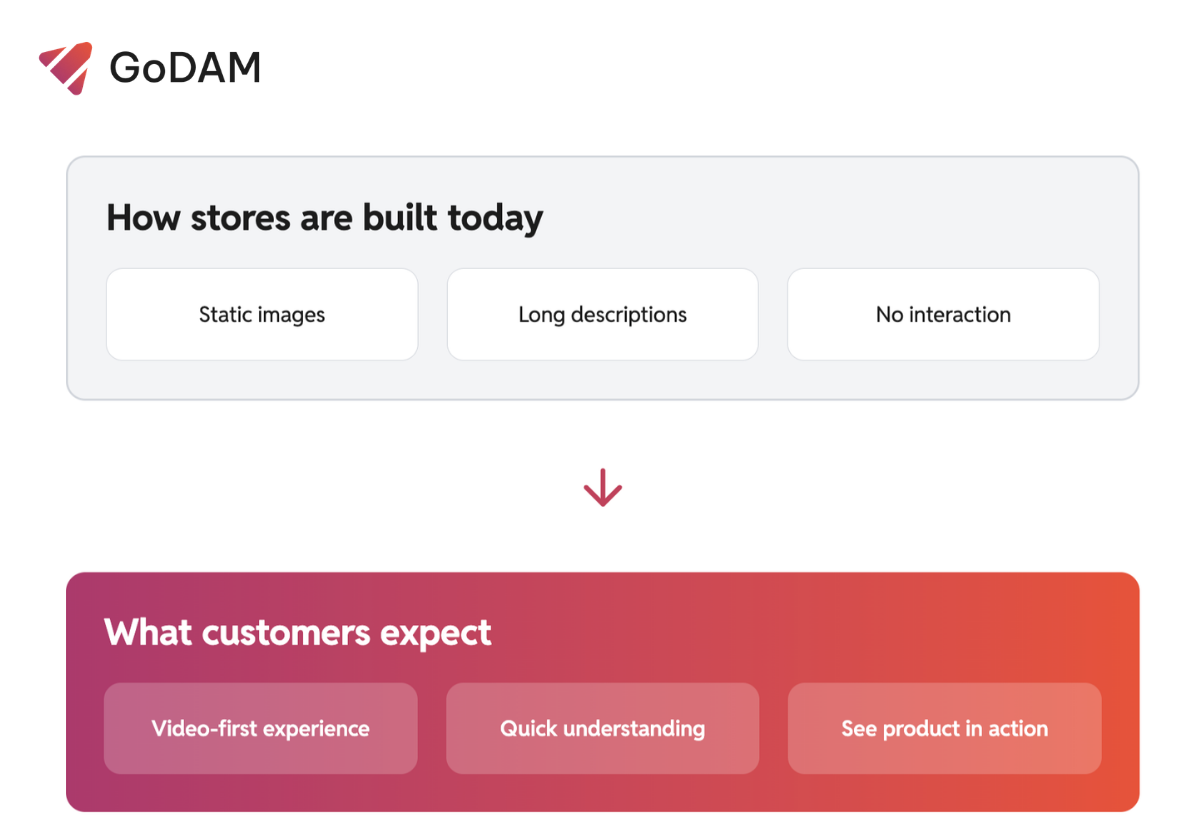
Many stores today still rely on:
- Static images
- Long descriptions
- Standard product pages
Meanwhile, customers are spending their time:
- Watching reels
- Scrolling TikTok
- Seeing products used in real situations
By the time they land on your store, they’ve often already formed an opinion.
That gap between what your page shows and what they’ve seen elsewhere is where conversions drop.
82% of the Internet Is Already Video. Is Your Store?
Cisco reports that video makes up 82% of global internet traffic.
That number changes how you should think about your product pages.
People aren’t just watching for entertainment. They’re using video to decide what to buy:
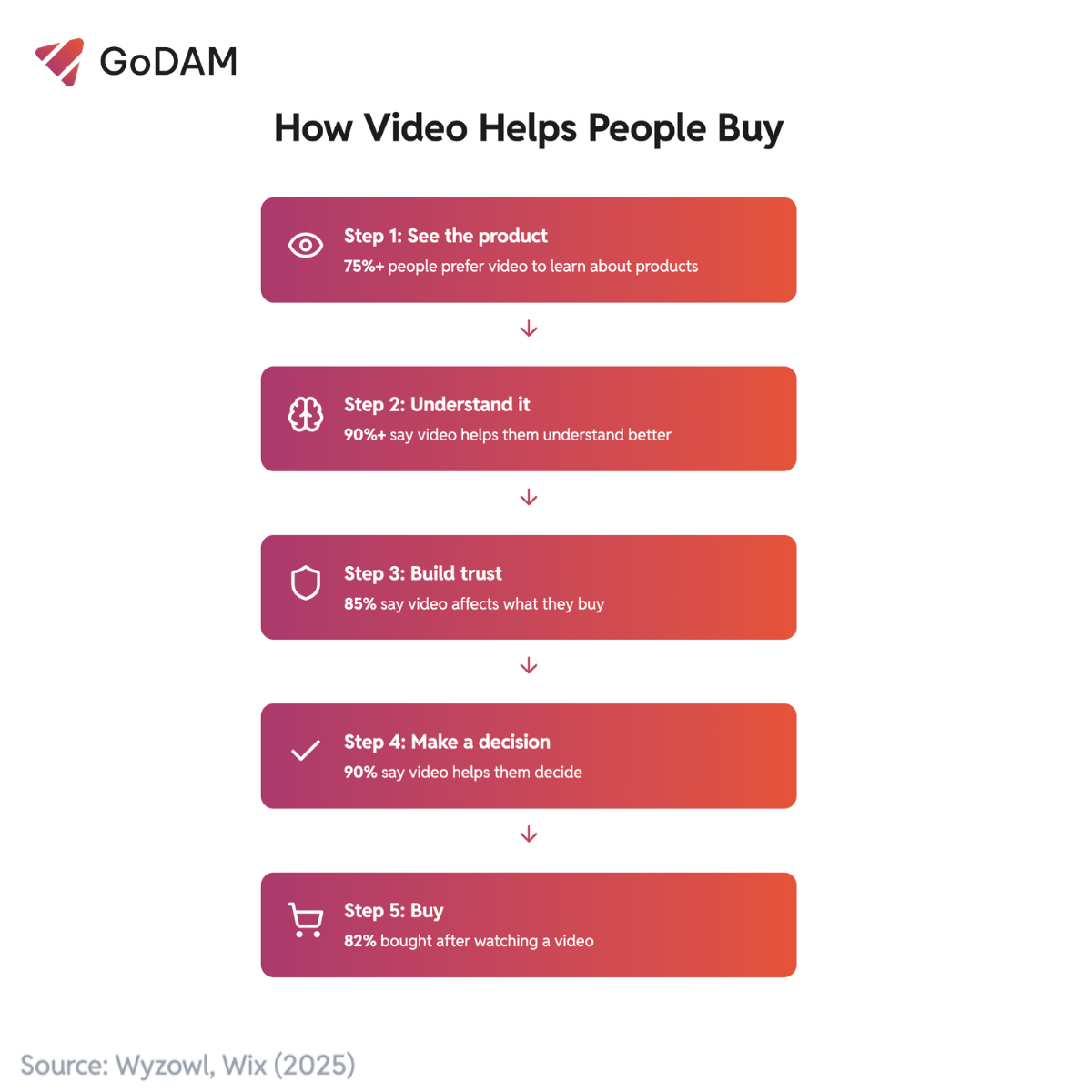
- 75% prefer video over text or images to learn about a product
- 90% say video helps them decide
- 85% say video influenced a purchase
Your page isn’t competing with another product page. It’s competing with the clarity people get from a video.
If your page removes that clarity, even slightly, you feel it in conversions.
Video Commerce Directly Increases Conversions
This is where it gets hard to ignore.
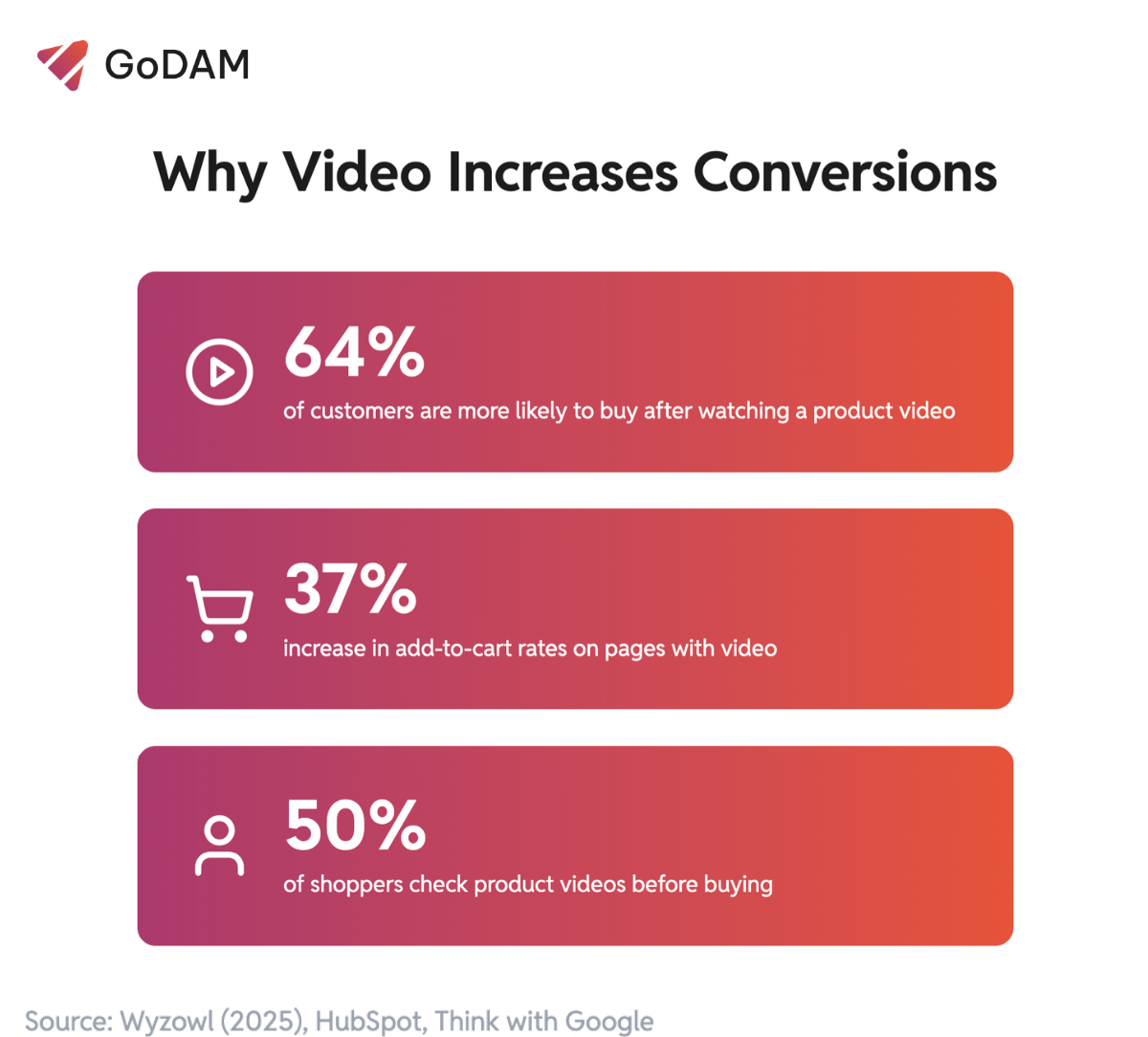
- 82% of consumers have bought something after watching a video
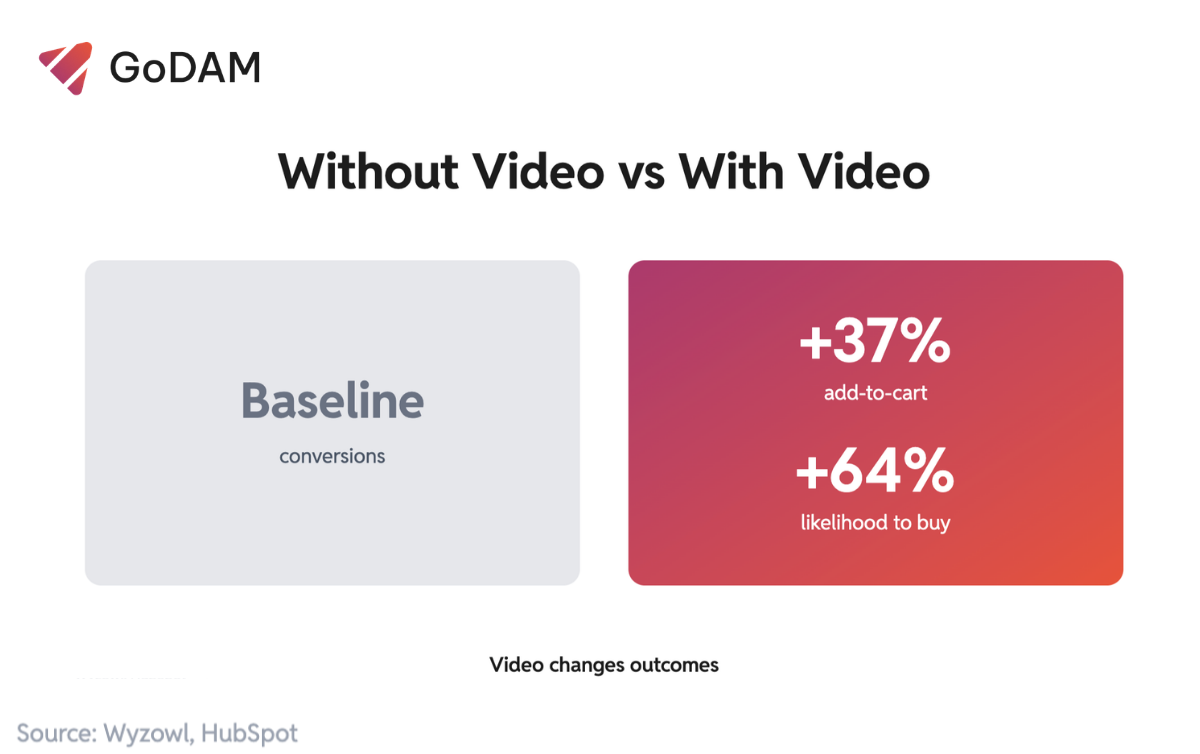
- 64% are more likely to buy after watching one
On-site data lines up with that:
- Pages with video convert at 4.8% on average
- Pages without video convert at 2.9%
That’s a 65% increase.
And it’s not limited to conversion rate:
- 90% of marketers report positive ROI from video
- 85% say it directly increased sales
- Companies using video grow revenue 49% faster
You don’t get that kind of lift from small tweaks. This changes how the page performs.
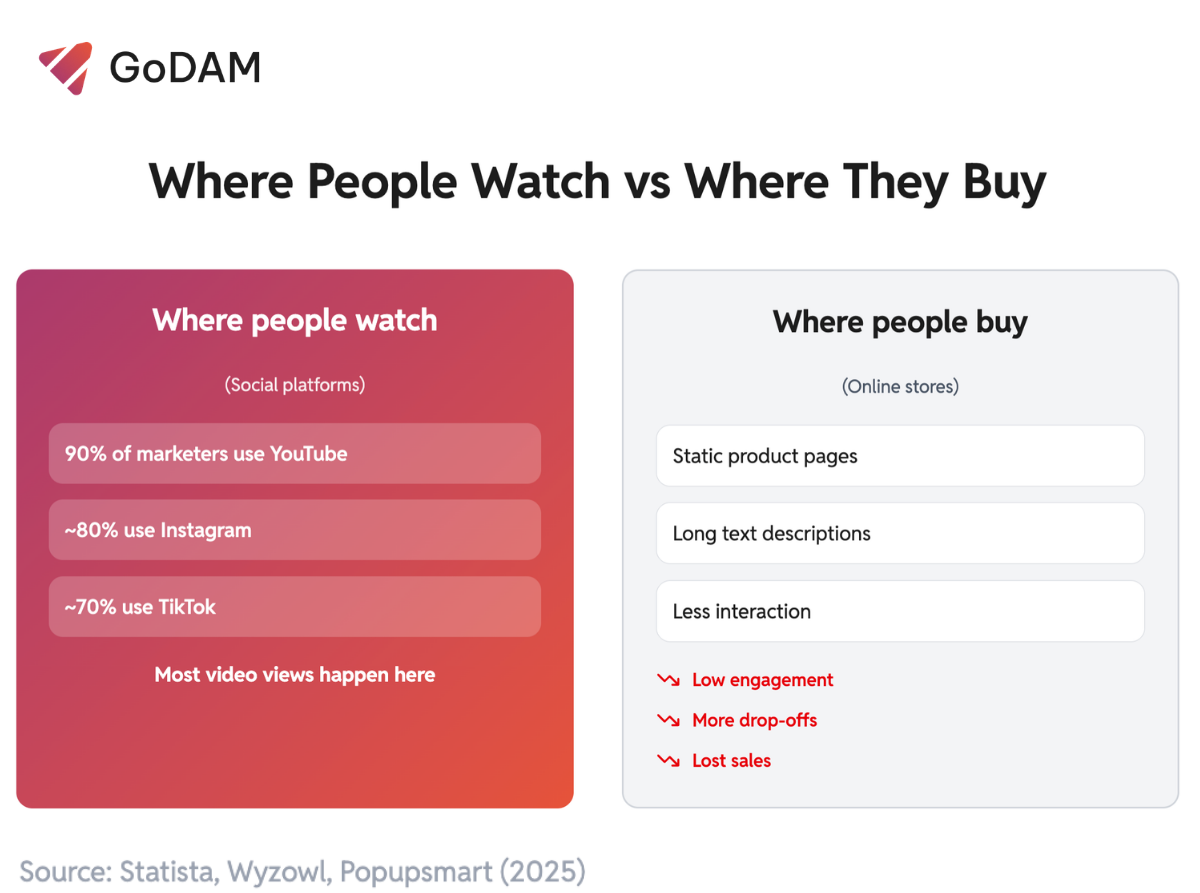
Most brands invest in video, then send customers away to watch it
This part is easy to miss.
Brands are already spending heavily on video:
- 90% use YouTube
- 80% use Instagram
- 70% use TikTok
Global video ad spend passed $176 billion in 2024 and is expected to hit $220 billion by 2026.
But look at the flow.
Someone sees your product on Instagram.
They get interested.
They click through to your store.
And now the video is gone.
If they want to see it again, they go back to the platform. Once they leave, you’re competing with everything else in their feed again.
The content that creates intent lives outside the store. The page that’s supposed to convert doesn’t carry that context forward.
Tools like GoDAM 2.0 exist for exactly this reason.
Instead of sending people back to YouTube or Instagram, you bring that same video experience onto your product page. They watch, stay in context, and can buy without leaving.
People Watch 17 Hours of Video Per Week. Are They Spending Any of That on Your Store?
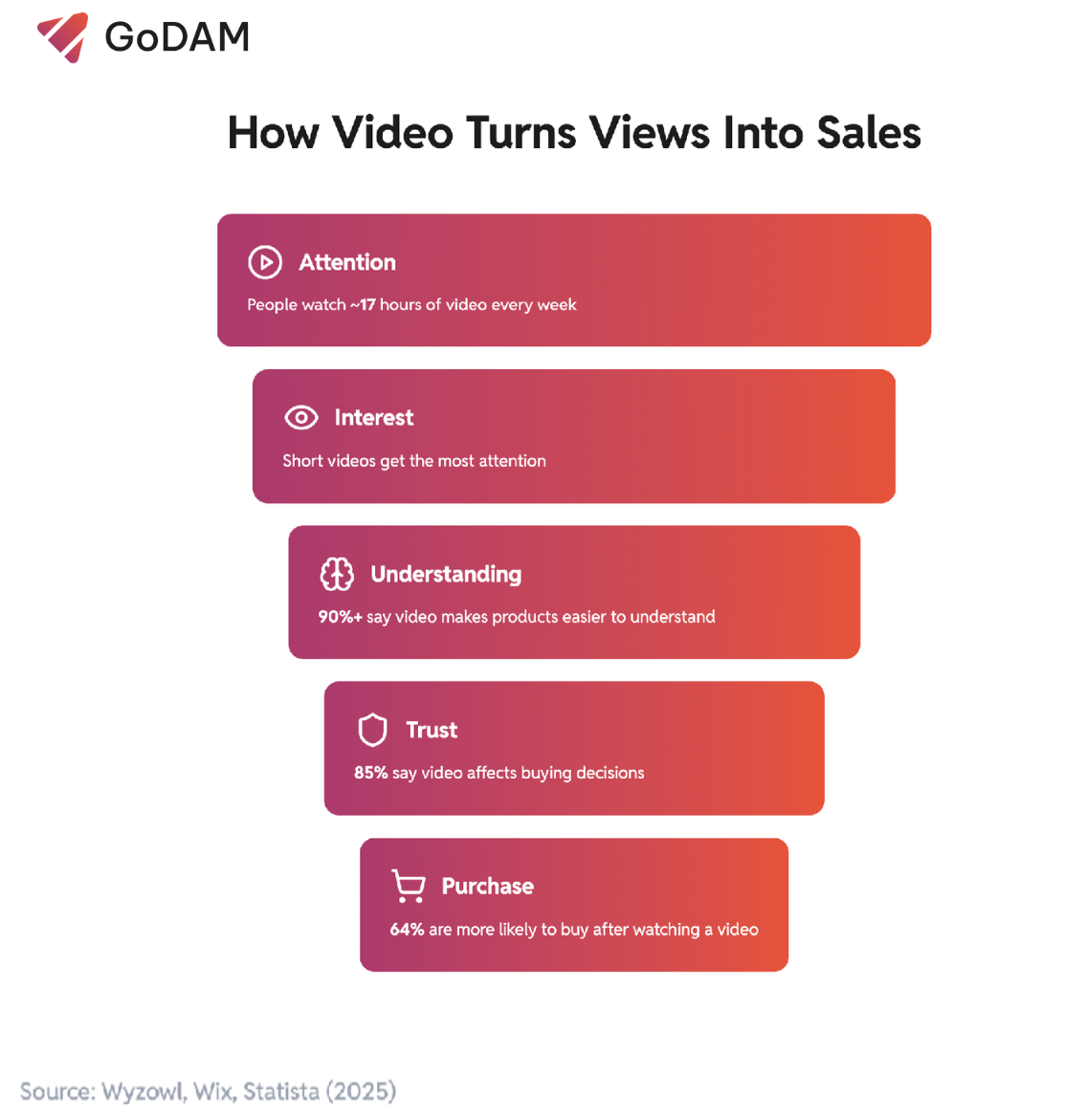
The average person watches 17 hours of video per week.
That’s over two hours a day.
Around 70% to 75% of that happens on mobile.
This matters more than it sounds.
If your product page doesn’t load video well on mobile, or doesn’t have it at all, you’re missing the format people are most comfortable with.
Not because they don’t want your product, but because the experience feels off.
Video answers questions before they turn into hesitation
Once someone lands on your page, you’re dealing with small doubts:
Will this actually work for me?
Is it the right size?
Does it look the same in real life?
Video handles these quickly.
- Over 80% of marketers say video increases time on page
- 90% to 95% of consumers say it improves product understanding
When people understand what they’re buying, they hesitate less.
That also shows up after the purchase:
- 60% of marketers say video reduces support queries
Fewer questions before buying, fewer issues after.
AI and Captions Are Making Video More Accessible for Smaller Stores
A few years ago, video meant production, editing, cost.
That’s changed.
- Around 50% of marketers now use AI tools to create or edit video
- 55% to 60% add captions or transcripts
Captions matter because a lot of mobile video is watched without sound. Without them, part of your audience never gets the message.
You don’t need high production. You need clarity.
A simple, honest product video usually outperforms something overproduced anyway.
What this looks like across most stores
Your customers already watch video every day. They prefer it when learning about products. They trust it when making decisions.
At the same time, most stores still rely on text and images, but have:
- Dozens of product videos on Instagram
- UGC from customers
- Clips from creators
That mismatch shows up in conversions.
Stores that use video grow faster. Stores that don’t end up competing on price more often because nothing else stands out.
What changes when video lives on your product page
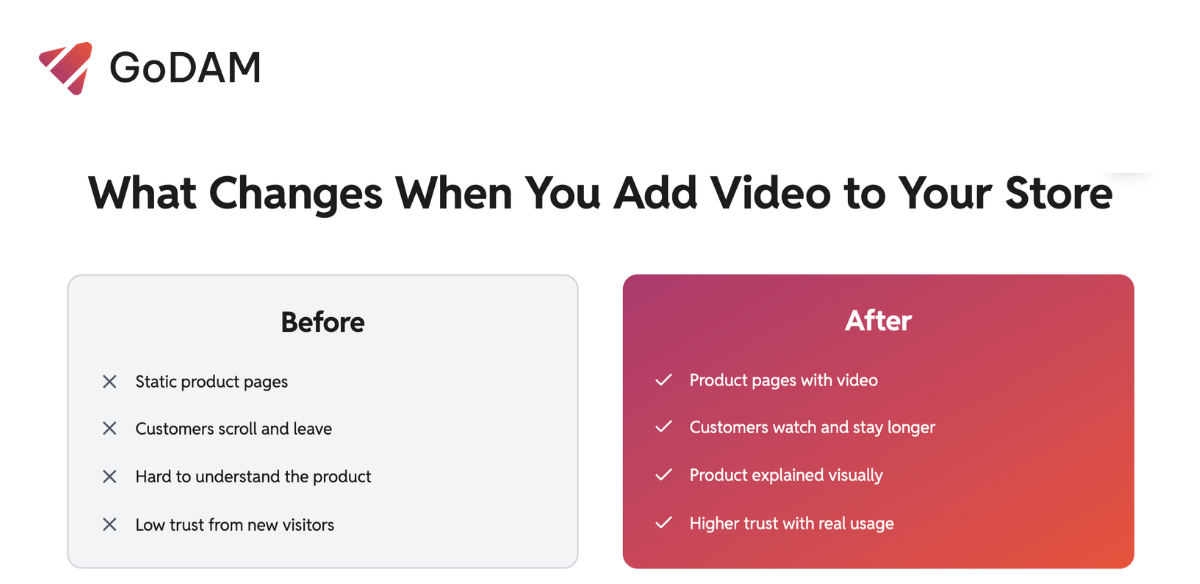
When you keep that context on the page, a few things shift:
People stay longer.
They understand faster.
They don’t need to leave to “double check” something.
And most importantly, the decision happens in one place.
That’s what video commerce actually fixes.
Where GoDAM 2.0 fits in
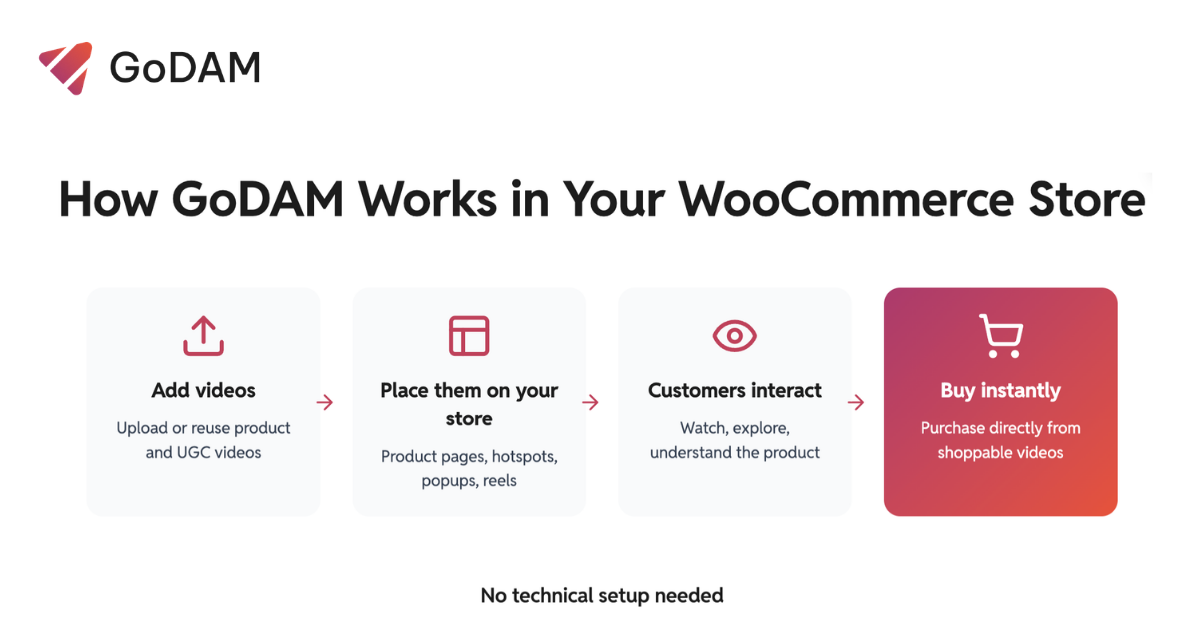
This kind of video-first buying flow is relatively new, and most stores are now starting to adapt to it.
GoDAM 2.0 adjusts that without forcing you to rebuild everything.
You can:
- Add shoppable videos directly to product pages
- Use the content you already have
- Let customers explore products visually
- Keep the entire experience inside your store
Instead of sending traffic back to social platforms, you keep it where the purchase happens.
Final thought
Your customers already use video to decide what to buy.
They’re doing it before they reach your store.
If your product page removes that experience, even slightly, you feel it in conversions.
Some stores have already adjusted to this.
Others still rely on pages built for how people shopped a few years ago.
That difference is starting to show up in revenue.
Leave a Reply